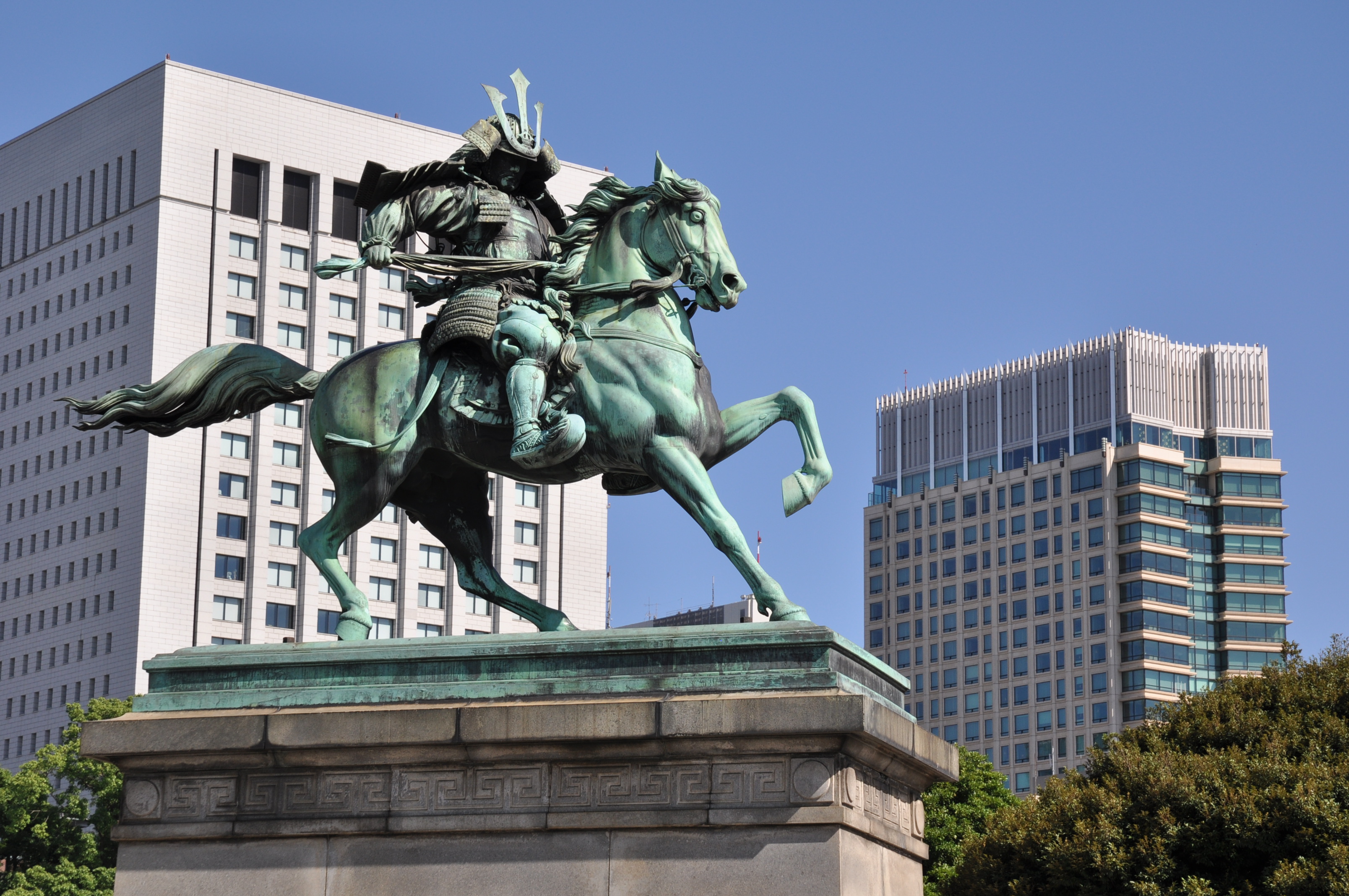
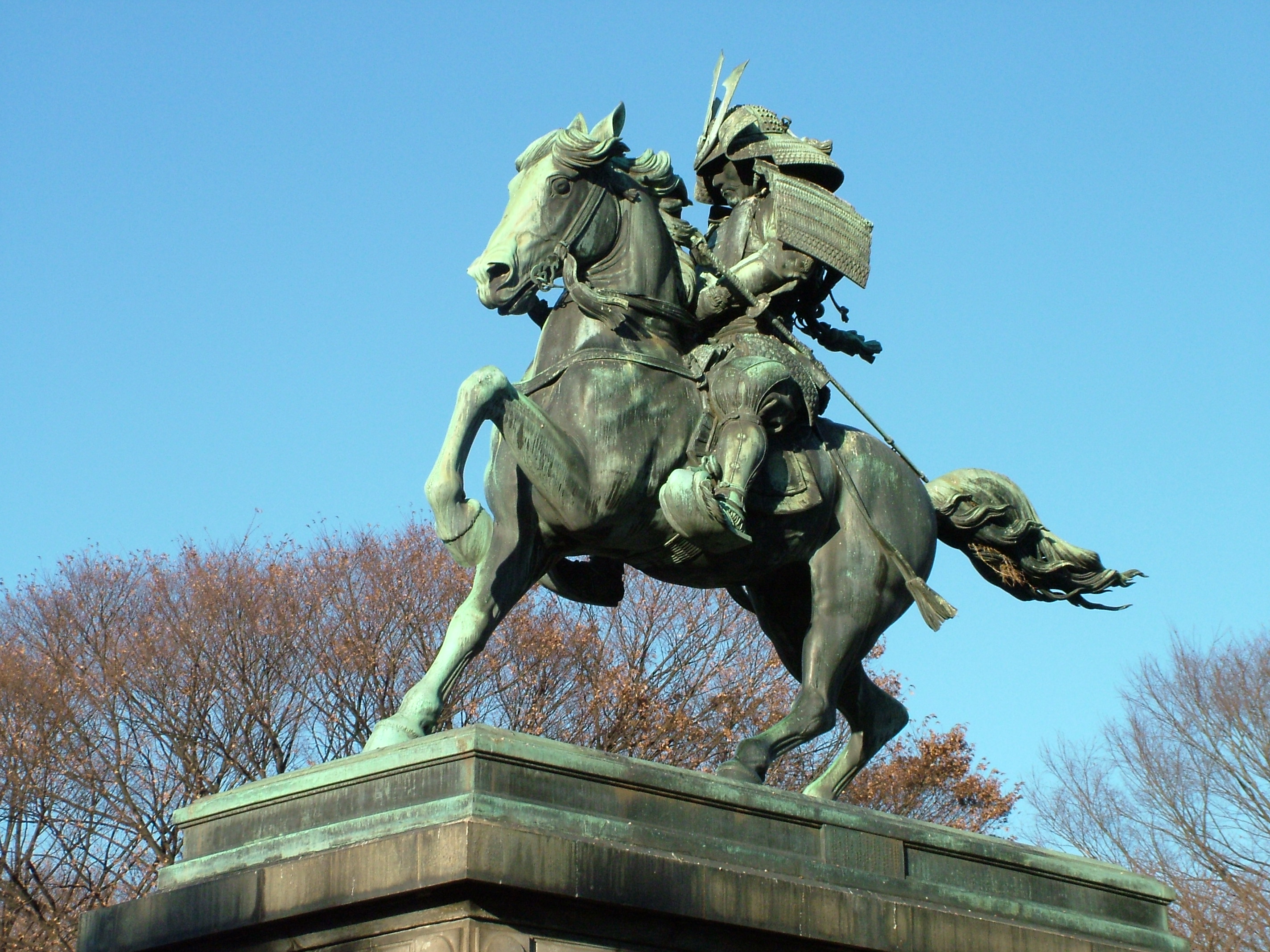
A statue of Kusunoki Masashige in Tokyo. Public Domain.
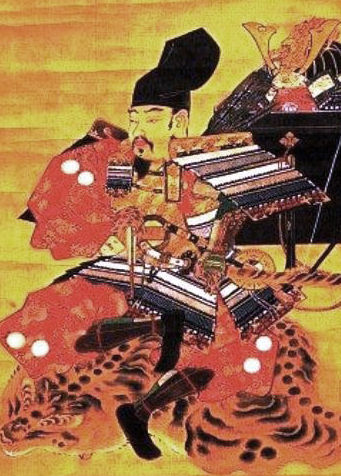
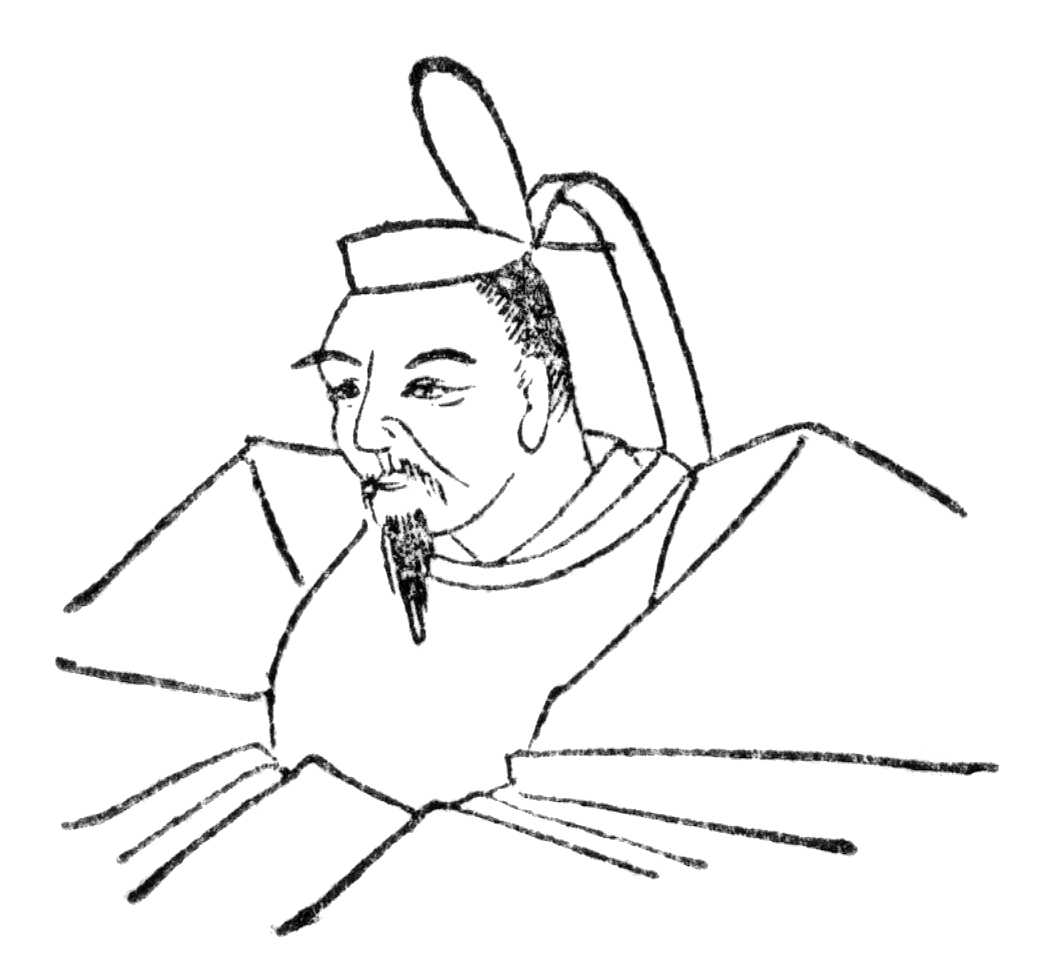
A portrait of Nitta Yoshisada. Public Domain.
A diagram of the Battle of Minatogawa. Kusunoki Masashige’s contingent became completely isolated when Nitta Yoshisada abandoned the western bank to defend the army’s rear from the Hosokawa landing. Source: User:Ash_Crow, CC BY-SA 3.0, via Wikimedia Commons
Kusunoki Masashige’s son Masatsura offers his father a saucer of sake in a farewell ritual. Masashige’s retainers weep behind him, knowing that he plans to sacrifice his own life for Emperor Go-Daigo’s cause. Source: Public Domain.
A latter-day depiction of Kusunoki Masashige wearing courtly attire and seated next to a celestial globe. A strong departure from his usual warlike depictions. Public Domain.
A portrait of a warrior which is believed to be Ashikaga Takauji. Public Domain.
The O-Yoroi (armor) of Ashikaga Takauji, which currently resides at the Metropolitan Museum of Art. Public Domain.
A memorial marker commemorating the Battle of Tatarahama, where Ashikaga Takauji set the Kikuchi clan to flight and secured his place on Kyushu. Source: 震天動地, CC BY-SA 3.0, via Wikimedia Commons
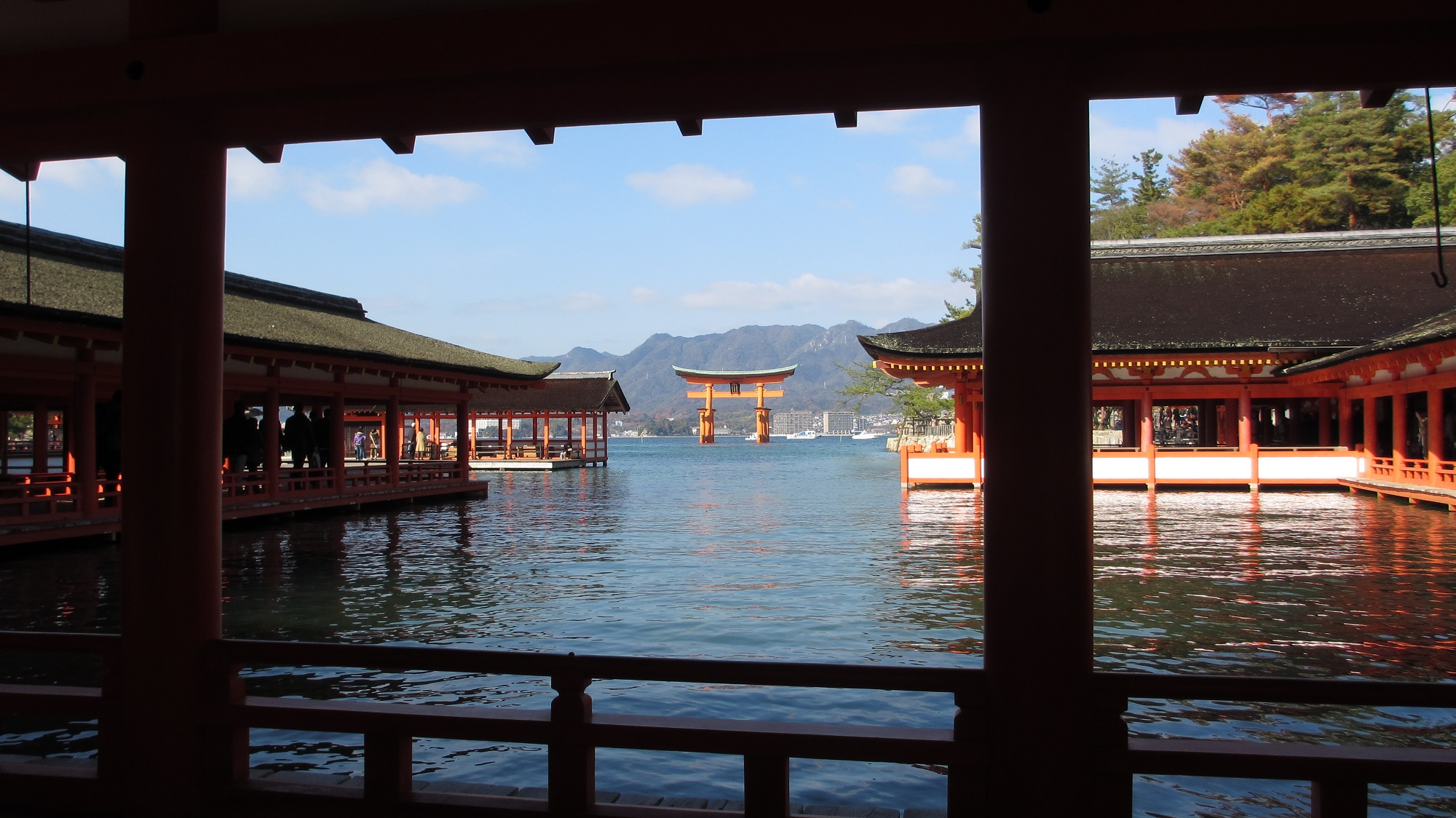
A view from Itsukushima Shrine at high tide. This was one of Takauji’s stops on his journey to the capital, where he prayed for victory. Longtime pod listeners will remember that this shrine was originally built thanks to the support of Taira Kiyomori. Source: JohnnyOneSpeed, CC BY-SA 3.0, via Wikimedia Commons
A portrait of Emperor Go-Daigo, which depicts him as an enlightened ruler (the items in his hands are vajras, which are used in Shingon Buddhist rituals). Public Domain.
A statue of Prince Moriyoshi (also called Prince Morinaga) at a shrine in modern-day Kamakura. Public Domain.
A portrait of Kusunoki Masashige, a samurai who would later become a symbol of loyalty and martial virtue. Public Domain.
A portrait believed to depict Nawa Nagatoshi (top and bottom figures), who befriended Prince Moriyoshi in order to oppose Ashikaga Takauji. Public Domain.
A portrait believed to depict Ashikaga Takauji, shown here in his courtly garb but with a sword still on his hip. His act of disobedience would have vast repercussions for all of Japan. Public Domain.
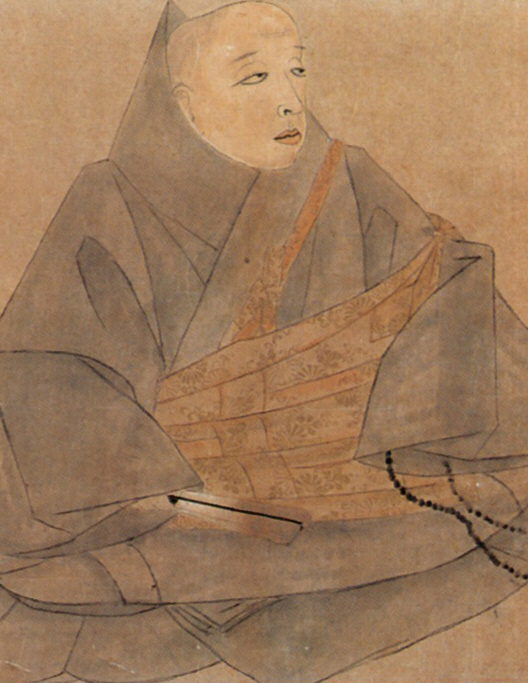
A portrait of Emperor Go-Daigo by artist Bunkanbo Koshin. Unlike many of the images we have of famous Japanese leaders, this piece is contemporary: it was painted in 1339, therefore we can surmise that Emperor Go-Daigo probably looked very similar to this. Source: Public Domain
The signature of Emperor Go-Daigo, which would have appeared on official documents. Source: Go-Daigo, CC BY-SA 3.0, via Wikimedia Commons
A portrait of a samurai believed to be Ashikaga Takauji, artist unknown. Source: Public Domain
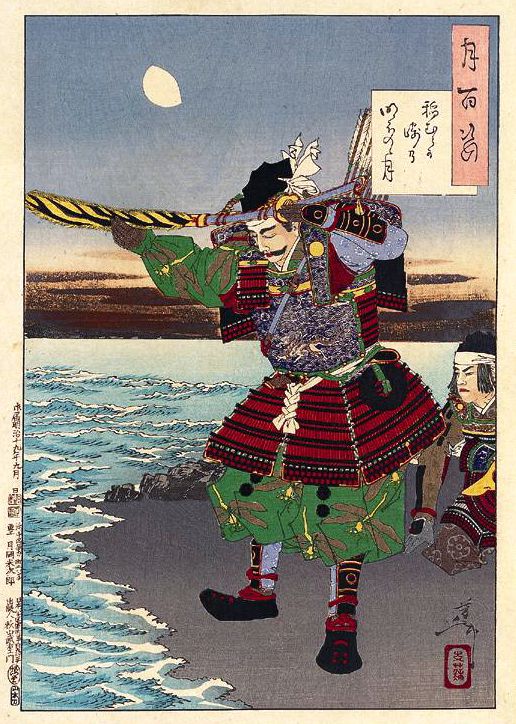
A painting by later artist Yoshitoshi of Nitta Yoshisada offering his sword to Amaterasu in exchange for causing the tide to recede. Source: Public Domain
A statue of Kusunoki Masashige which currently sits in front of the Imperial Palace in Tokyo. Source: David Moore, CC BY-SA 2.5, via Wikimedia Commons
A painting by Yoshitoshi of Hojo Takatoki fighting Tengu (goblin-like creatures). Source: Public Domain
The memorial stone which marks the location of Akasaka Fortress, which was burned down in 1331. Source: I, KENPEI, CC BY-SA 3.0, via Wikimedia Commons
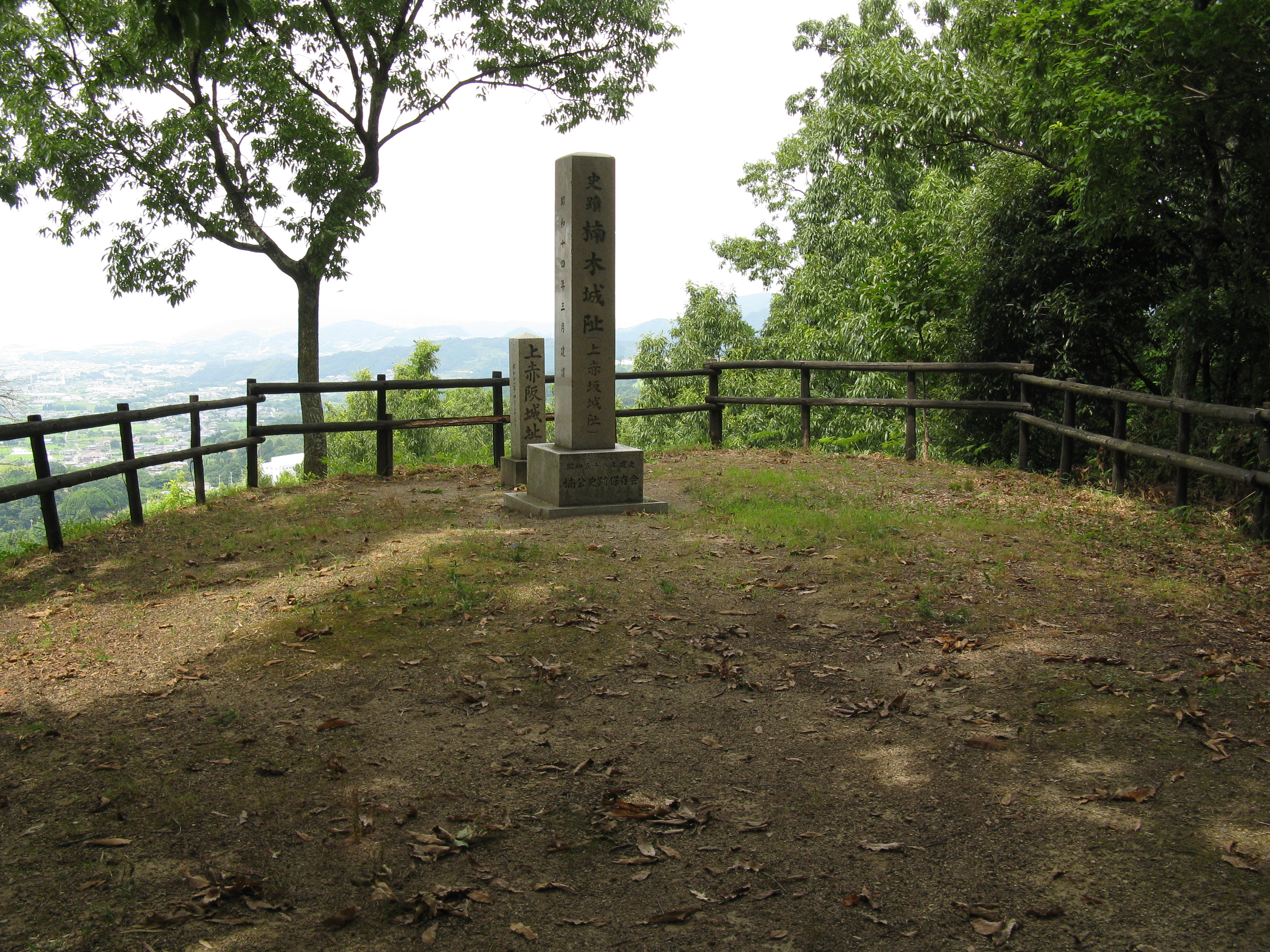
The memorial stone marking the location of Kami-Akasaka (Upper Akasaka) Fortress, which was destroyed in early 1333 after its water supply was cut off. Source: I, KENPEI, CC BY-SA 3.0, via Wikimedia Commons
A scale model of Chihaya Fortress. The original fortification was destroyed long after the Genko War concluded. Source: Wikiwikiyarou, CC BY-SA 3.0, via Wikimedia Commons
A dramatic painting by Utagawa Yoshikazu imagining the siege of Chihaya Fortress, created in the 1800s. The real structure was not a fully-developed stone castle, but a large well-made fort. Note the Hojo clan crest on the banner in the center bottom of the piece. Public Domain
Season 7, Episode 14: The Twilight of the Kamakura BakufuA painting of Emperor Go-Uda, who acted as sitting Emperor from 1274-1287Emperor Fushimi, who reigned as Tenno from 1287-1298. Public DomainEmperor Go-Fushimi, who reigned as sitting Emperor from 1298-1301. Public Domain
Emperor Go-Nijo, who sat upon the Chrysanthemum Throne from 1301-1308. Public Domain
Emperor Hanezane, who served as Tenno from 1308-1318. Public Domain
Emperor Go-Daigo, whose determination to rule outright as Emperor brought about the Genko War. Public Domain
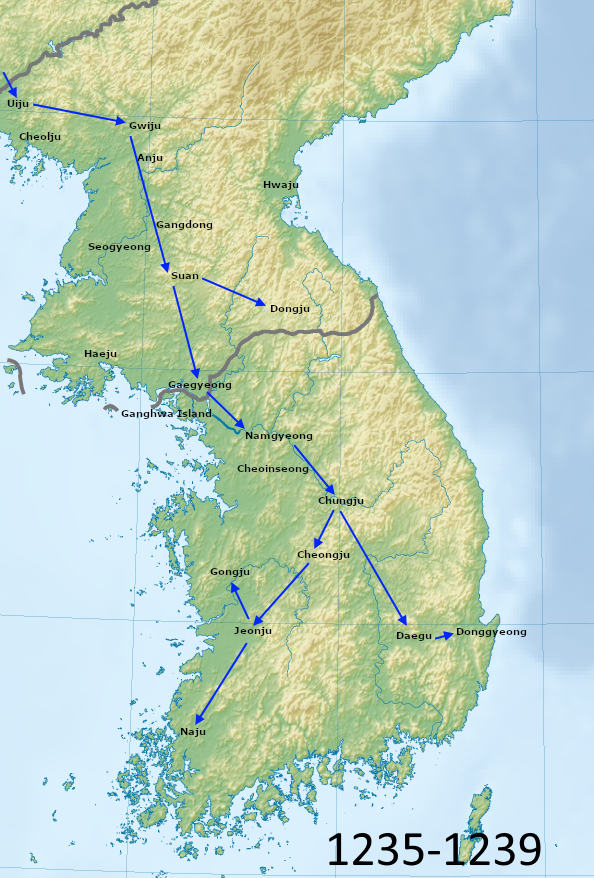
One of the early Mongol invasions of Korea. Source: Qiushufang, CC BY-SA 4.0, via Wikimedia Commons
A map of the Mongol Empire’s war against the Song Dynasty. Source: SS, CC BY-SA 4.0, via Wikimedia Commons
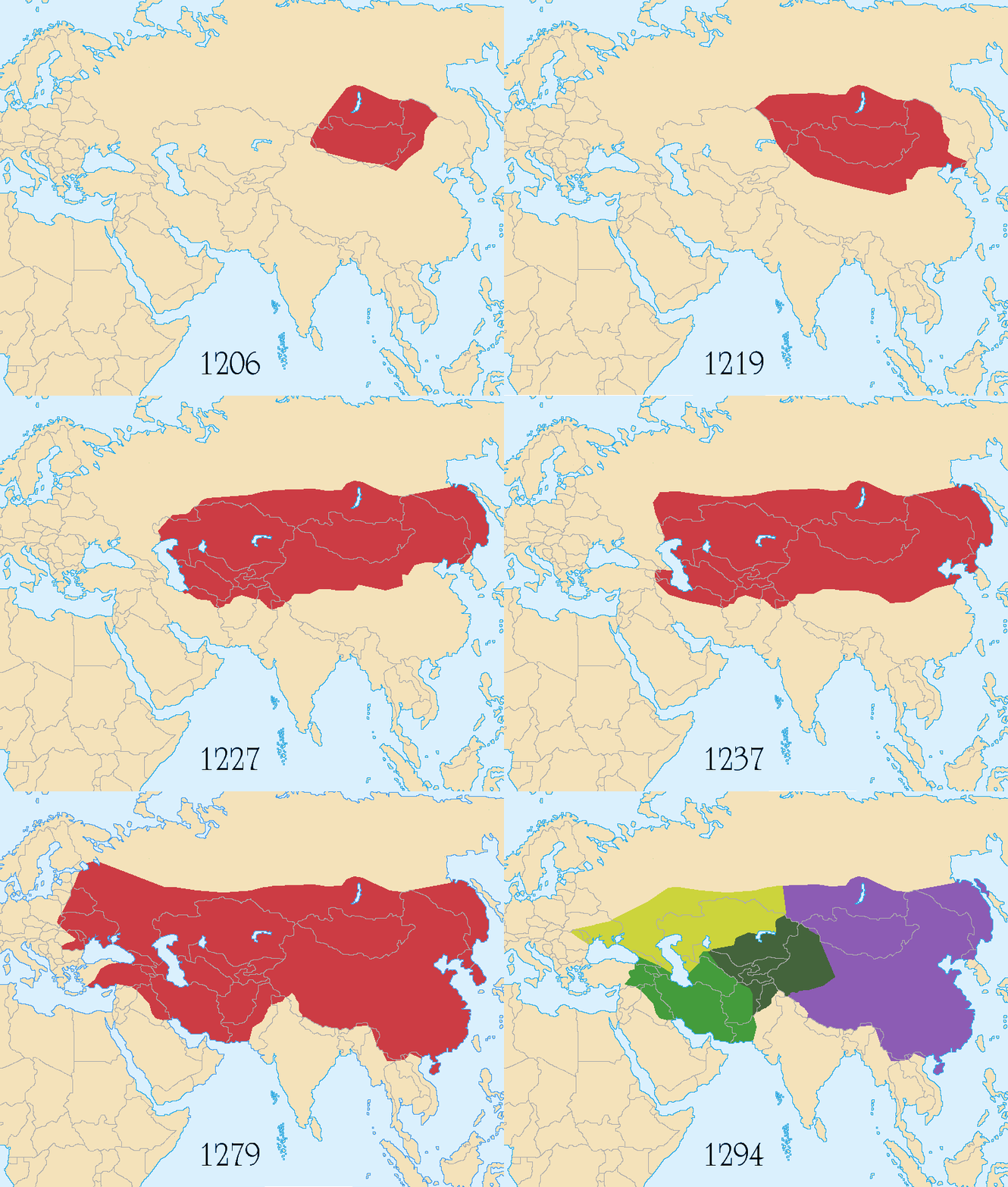
The division of the Mongol Empire. The Yuan Dynasty, Chagatai Khanate, Golden Horde, and Ilkhanate were all successor states to the largest empire ever made. Source: derivative work: Wengier (talk)Asia_in_1345.svg: Teaandcrumpets, Public domain, via Wikimedia Commons
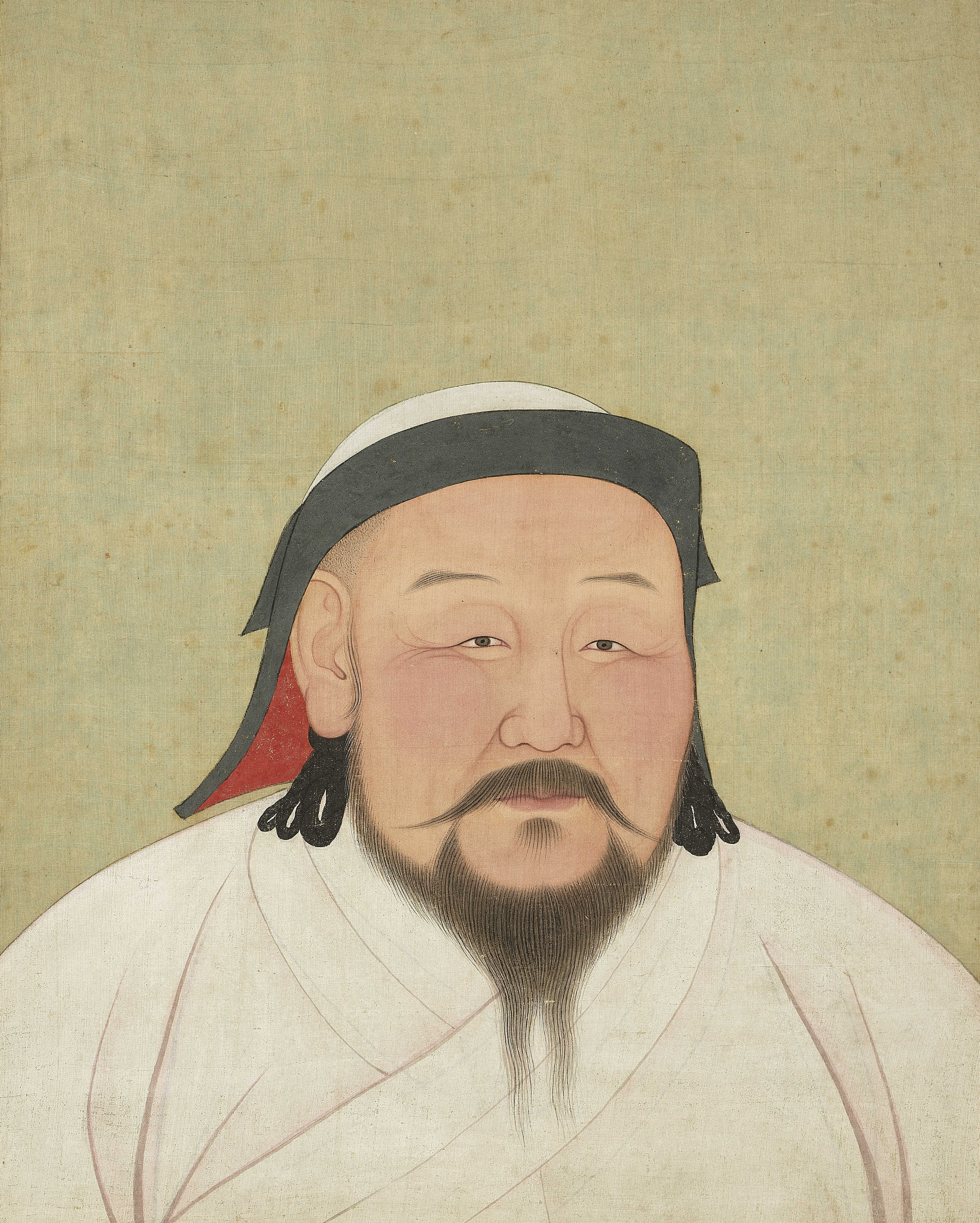
A portrait of Kublai Khan, the Yuan Dynasty Emperor of China who tried to conquer Japan. Source: Public Domain
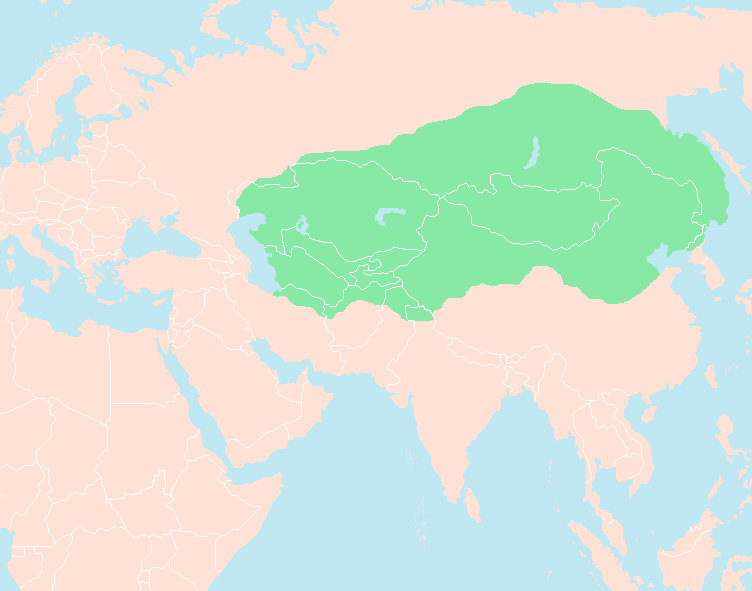
The Mongol Empire in 1227, at the end of Genghis Khan’s life. Big as it was, his successors would manage to expand its borders even further. Source: Public Domain
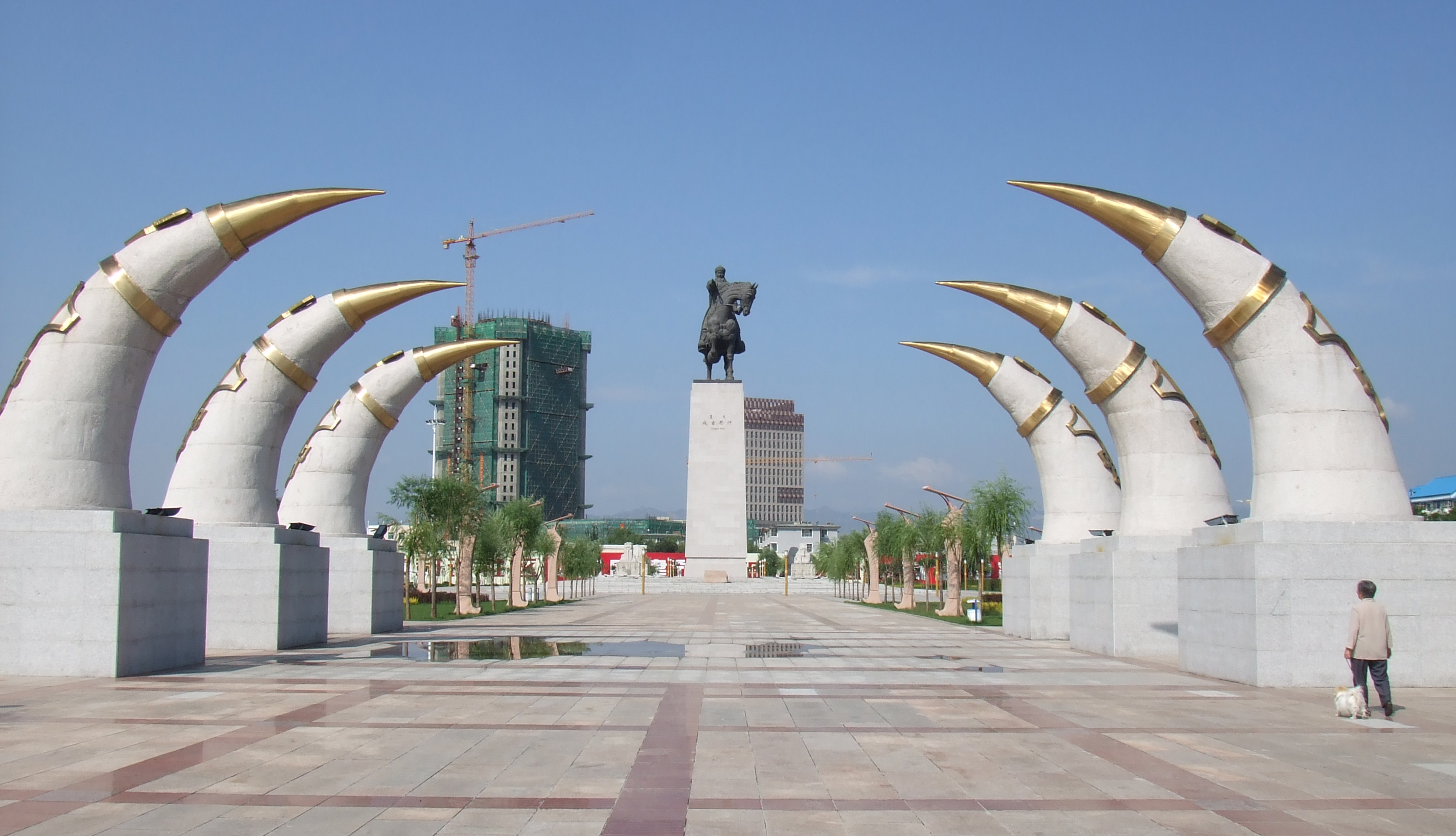
A monument dedicated to Genghis Khan in modern-day Mongolia. Source: Fanghong, CC BY-SA 3.0, via Wikimedia Commons
The Mausoleum of Genghis Khan in present-day Mongolia. While this buidling is quite lovely, the actual resting place of Genghis Khan is not known. Source: Fanghong, CC BY-SA 3.0, via Wikimedia Commons



















Recent Comments