A portrait of Emperor Tsuchimikado, who stayed out of the plotting that led to the Jōkyū War. Source: Public Domain
A portrait of Emperor Juntoku, who arranged his own abdication so that he could be more involved in the plot against Kamakura. Source: Public Domain
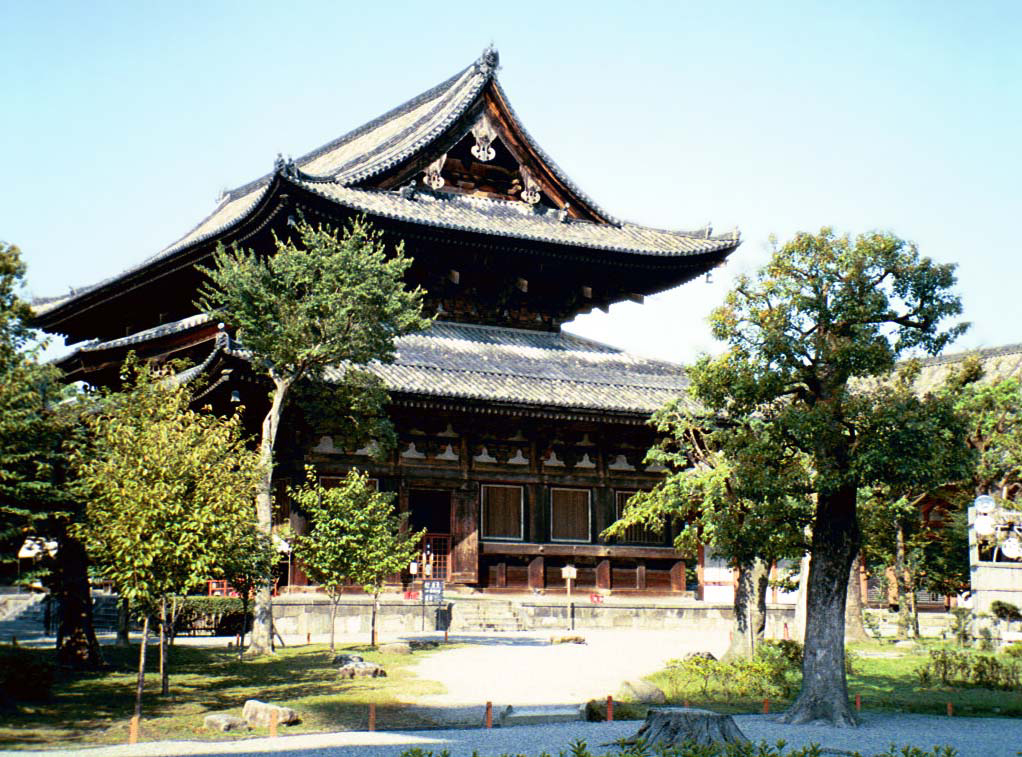
The Kondo (Main Hall) of Toji Temple, where the imperial partisan holdouts likely took shelter and prepared to commit ritual suicide. Source: Michael Gunther, CC BY-SA 4.0, via Wikimedia Commons
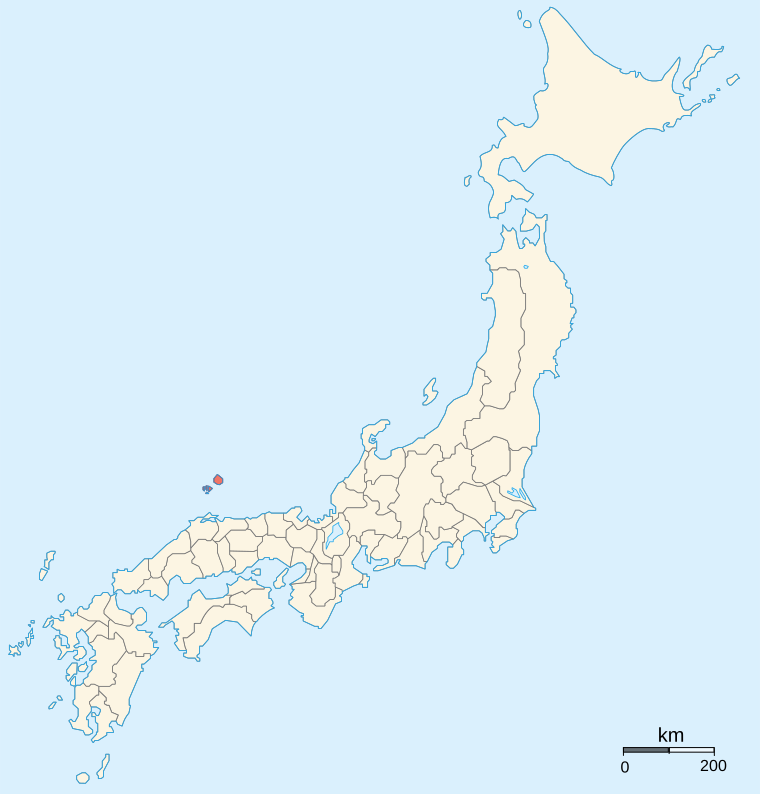
The Oki Islands (red), where Retired Emperor Go-Toba was exiled after the Jōkyū War. Source: Ash_Crow, CC BY-SA 3.0, via Wikimedia Commons
Sado Island (red), where Retired Emperor Juntoku was exiled after the Jōkyū War. Source: Ash_Crow, CC BY-SA 3.0, via Wikimedia Commons
Tosa Province (red) where Retired Emperor Tsuchimikado was exiled after the Jōkyū War. Source: Ash_Crow, CC BY-SA 3.0, via Wikimedia Commons
A closer view of the Ginko tree. Some later accounts claimed that Kugyo hid behind this tree before he murdered his uncle, but this is considered an invention of later storytellers. Source: Chris 73 / Wikimedia Commons, CC BY-SA 3.0
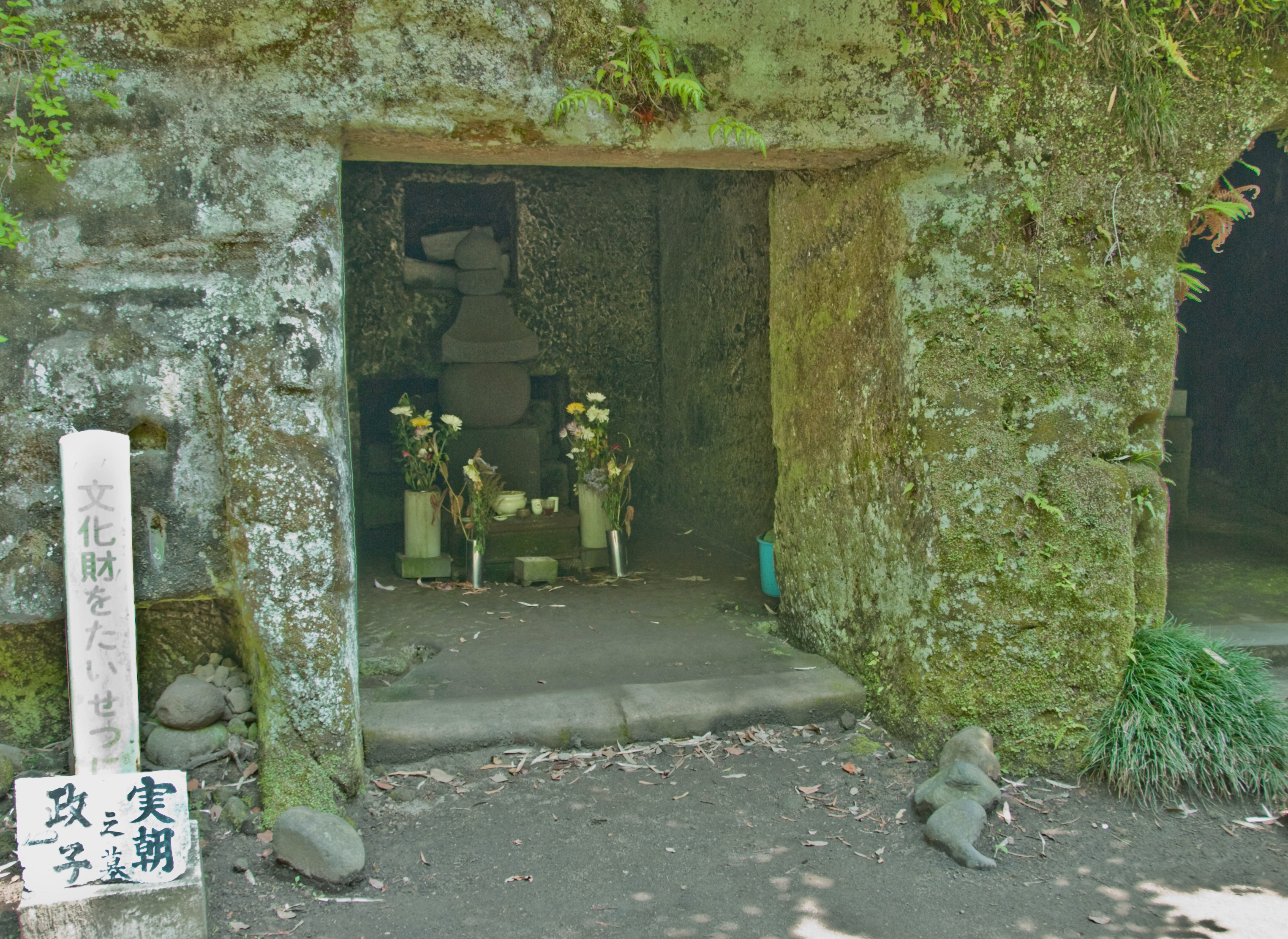
A monument honoring Minamoto Sanetomo in the Jufuku-in cemetary in Kamakura. Source: Public Domain
The second Kamakura Shogun, Minamoto Yoriie. Although he holds a sword, the office of Shogun had been transformed into a civil government position. Artist unknown. Source: 建仁寺, Public domain, via Wikimedia Commons
A portrait of Minamoto Sanetomo, the third Kamakura Shogun. Although he appears here arrayed in full battle gear, Sanetomo never led troops in battle and likely never wore armor outside ceremonial occasions. Artist: Yashima Gakutei. Source: Yashima Gakutei (八島岳亭; c. 1786 – 1868), Public domain, via Wikimedia Commons
Another portrait of Sanetomo, here arrayed in his civilian robes which would have more closely matched his day-to-day appearance. Artist: Goshin. Source: Hannah, Public domain, via Wikimedia Commons
A statue of Hatakeyama Shigetada, the son-in-law of Hojo Tokimasa who was executed for supposed treason against the Shogunate. Source: Koda6029, CC BY-SA 4.0, via Wikimedia Commons
A portrait of Hojo Yoshitoki, who took over as Shikken (regent) after his father, Hojo Tokimasa, was forced into retirement. Source: wilkinson777が撮影, Public domain, via Wikimedia Commons
Season 7, Episode 3: Minamoto Yoritomo – The Man of the Hour
A painting of Hojo Tokimasa. Note the bearskin boots, tachi sword, and bow. Artist: Utagawa Yoshitora Source: Public Domain
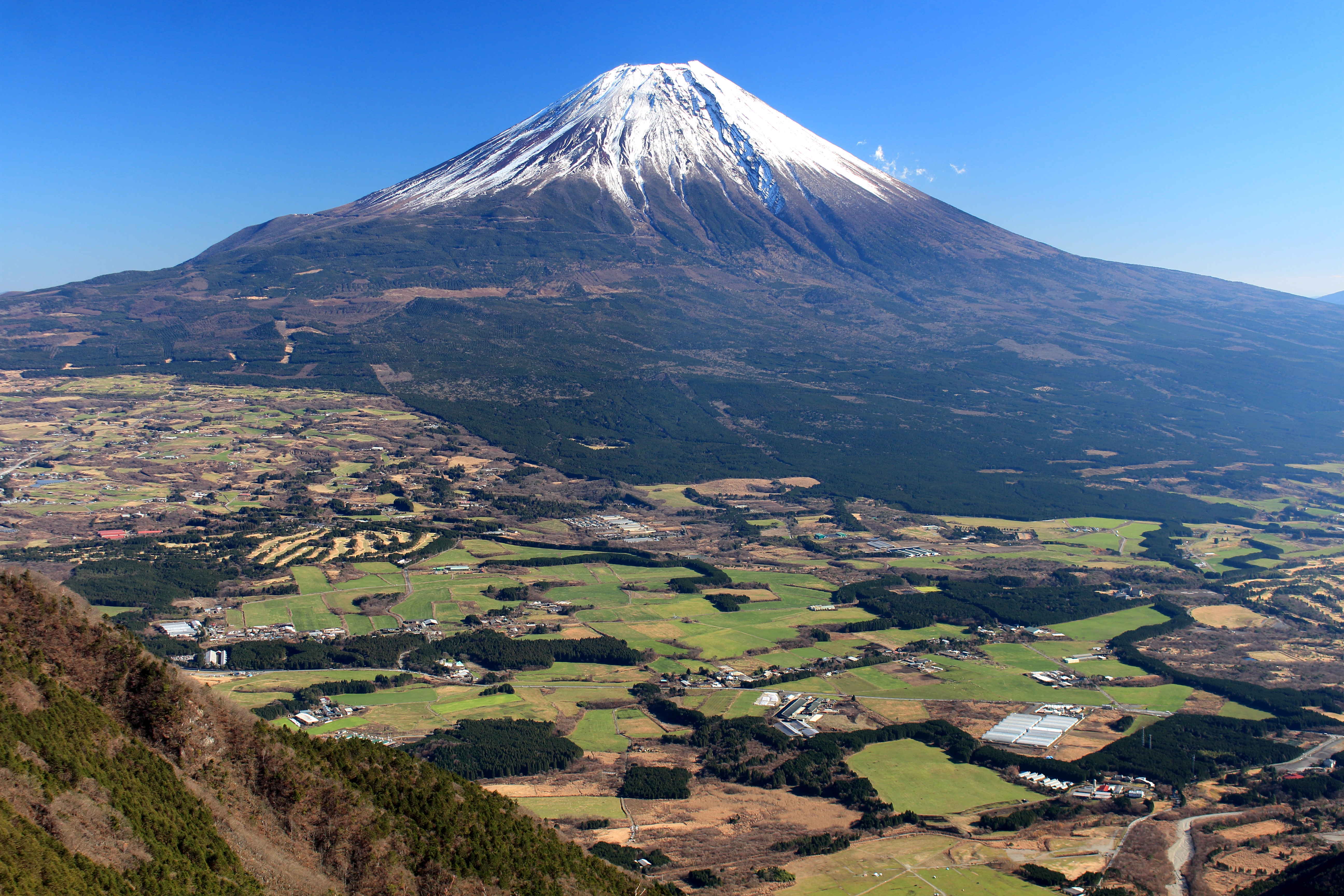
The area known as Fujino, where the Fuji no Makigari took place. Note the vast expanse of forest that covers the feet of Mount Fuji looming above. Source: Alpsdake, CC BY-SA 4.0, via Wikimedia Commons
An illustrated page from the Soga Monogatari (The Tale of the Soga Brothers). In this panel, they are enacting their revenge by killing Kudo Suketsune. Artist: Utagawa Hiroshige. Source: Public Domain
An illustration of the aftermath of the Soga brothers’ assassination. In the background, the base of Mount Fuji can be seen. Artist: Utagawa Yoshitora. Source: Public Domain
Soga Tokimune being held back by Gosho Goromaru. Artist: Tsukioka Yoshitoshi. Source: Public Domain
A collage of images from the Fuji no Makigari procession of the Yokkaichi Festival, celebrated in Mie Prefecture. Children dressed as samurai shoot arrows into a papier-mache wild boar. Source: Hamadakko, CC0, via Wikimedia Commons
When Yoritomo called Retired Emperor Go-Shirakawa a “Goblin,” he was referring to mischievous Japanese spirits called “Tengu.” Pictured above is one such Tengu, menacing an elephant. Public Domain
Emperor Go-Toba, whose original coronation did not include the Imperial Regalia. Public Domain
Minamoto Michichika, the leader of the anti-Bakufu faction who ousted Fujiwara Kanezane from the office of Kampaku. Public Domain
Fujiwara Kanezane, also called Kujo Kanezane, who was removed from his position at court with Yoritomo’s consent. Public Domain
A carving believed to portray Minamoto Yoritomo, the winner of the Gempei War who created the Kamakura Bakufu. Source: Myshkin., CC BY-SA 4.0, via Wikimedia Commons
A three-screen painting of Yoritomo’s procession into Heian-kyo shortly after the end of the Gempei War. Artist: Utagawa Sadahide. Public Domain
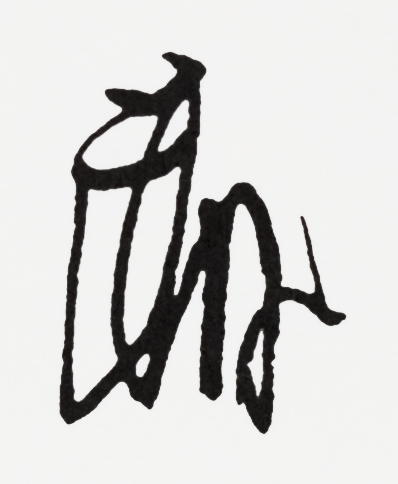
Minamoto Yoritomo’s signature, which would have appeared at the bottom of official Shogunate edicts, orders, and correspondence. Public Domain.
Season 6, Episode 22: The Gempei War Part 4: The Final Countdown
Kiso Yoshinaka and his wife, Tomoe Gozen, at the Battle of Awazu. Source: Public Domain
The Minamoto-allied samurai make their way to the Battle of Ichi-no-Tani. Public Domain
The Battle of Kojima. The Minamoto horsemen are charging through the low tide to take the island fortress. Source: Public Domain
The Battle of Yashima, in which the Taira were goaded into facing the Minamoto forces in the surf. Source: Public Domain
A depiction of the Battle of Dan-no-Ura, the final battle in the Gempei War in which the Taira were unequivocally vanquished. Source: Public Domain
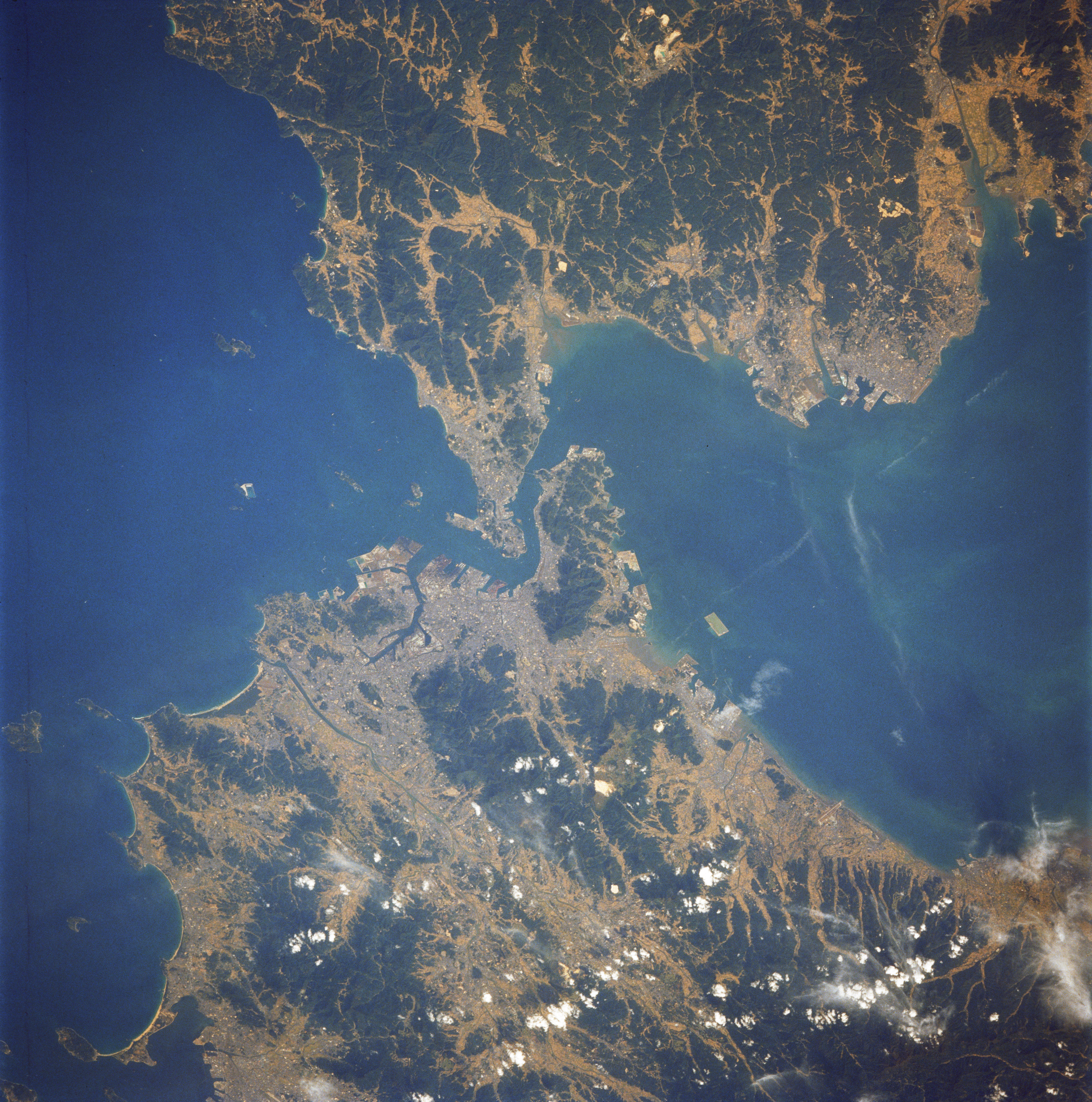
A satellite photo of the Shimonoseki straits which allows you to see just how narrow is the passage of water between Kyushu and Chugoku. Source: Image Science and Analysis Laboratory, NASA-Johnson Space Center, Public domain, via Wikimedia Commons
Season 6, Episode 21: The Rise and Fall of Kiso Yoshinaka
A painting of Kiso Yoshinaka. Source: Public Domain
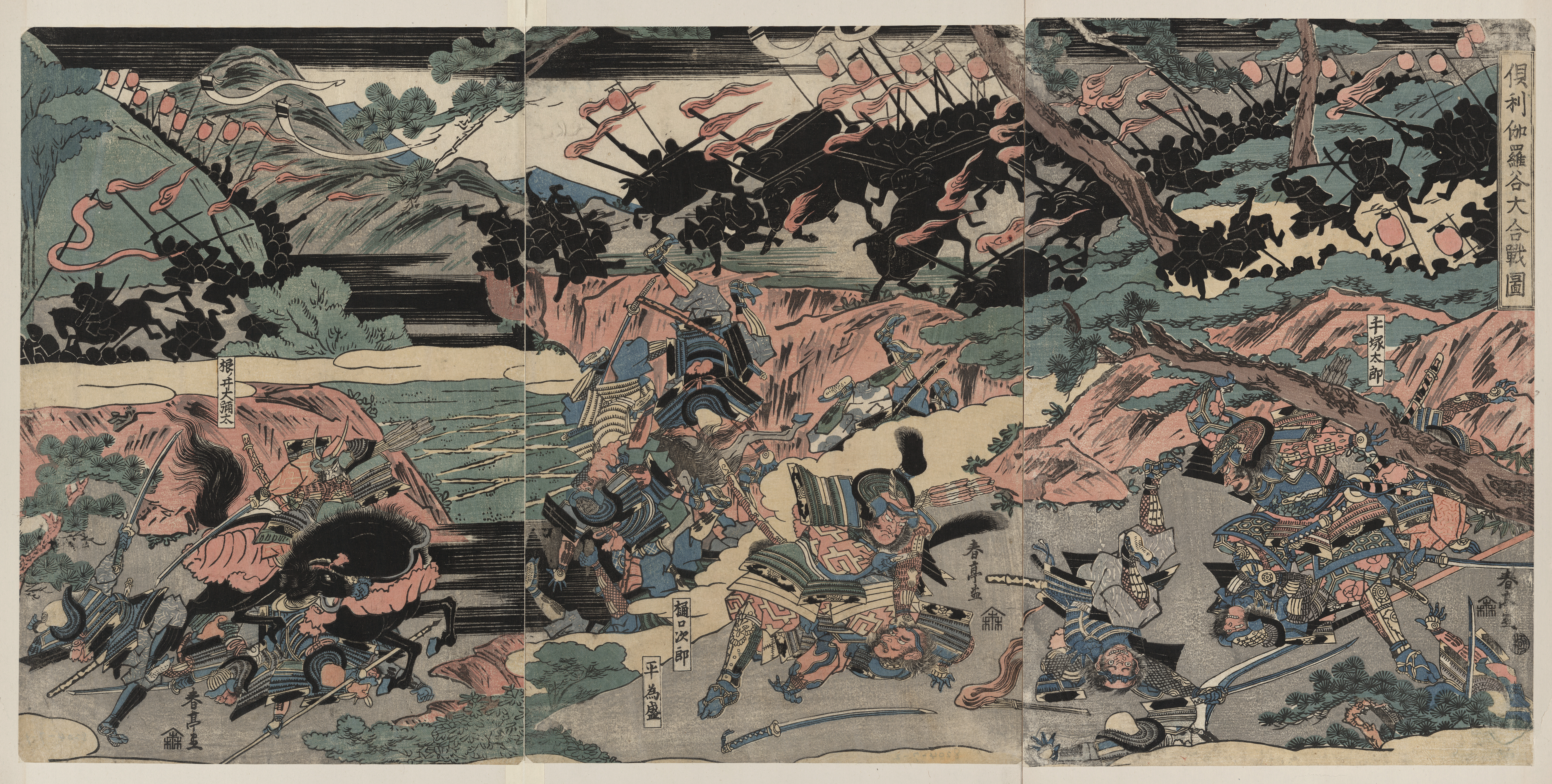
A painting by Katsukawa Shuntei of The Battle of Kurikara Pass. Note the oxen with torches affixed to their horns in the background. Source: Public Domain
A statue of a bull with torches tied to its horns honoring Kiso Yoshinaka’s victory at Kurikara Pass. Source: Bakkai at Japanese Wikipedia, CC BY 3.0 https://creativecommons.org/licenses/by/3.0, via Wikimedia Commons
Just south of Bitchu Province, which is highlighted in red above, is where the Battle of Mizushima occurred, which is when Kiso Yoshinaka’s martial luck began to run out. Source: Ash_Crow, CC BY-SA 3.0 http://creativecommons.org/licenses/by-sa/3.0/, via Wikimedia Commons
The race across Uji river between Kajiwara Kagesue and Sasaki Takatsuna. Source: Public Domain
Season 6, Episode 20: The Gempei War Part 2: A Reversal of Fortune
Minamoto Yoritomo displays his troops on the eastern side of the Fujigawa river. Mount Fuji is clearly visible in the background. Source: Public Domain
A painting of Taira Koremori, the ill-fated commander who lost the battle of Fujigawa. Source: Public Domain.
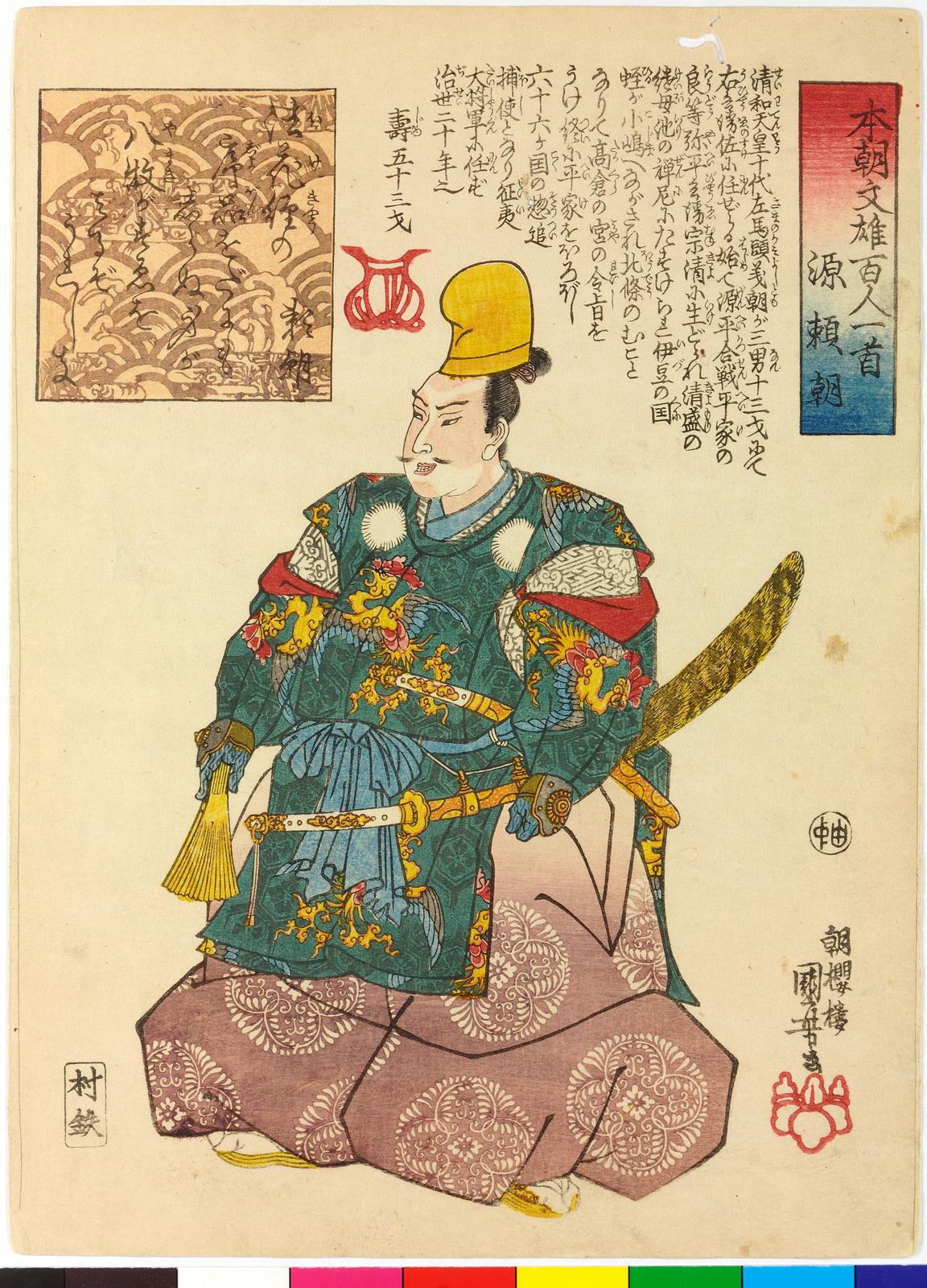
A painting of Minamoto Yoritomo, the victor of Fujigawa. Source: Public Domain
Minamoto Yoritomo’s signature, which he would have affixed to correspondences. Source: Public Domain.
A painting of Minamoto Yukiie, whose antics at the battle of Sunomatagawa led to his troops getting slaughtered after the Taira noticed that they were soaking wet. Source: Public Domain
A monument at the alleged site of the battle of Sunomatagawa.
Season 6, Episode 19: The Gempei War Part 1: An Ill-Fated Uprising
源平合戦
“Gempei Kassen,” which translates to “The Gempei War.” The first two characters are from Minamoto and Taira respectively.
A painting of Minamoto Yorimasa. Source: Public Domain
A depiction of Prince Mochihito, who initiated the Gempei War. Source: Public Domain
Byodo-In, or “The Phoenix Temple,” which miraculously has survived in its original form to this day. This is where Minamoto Yorimasa fled once the First Battle of Uji was lost. Source: Oilstreet, CC BY-SA 3.0 https://creativecommons.org/licenses/by-sa/3.0, via Wikimedia Commons
A depiction of the First Battle of Uji. Note the warrior monks crossing the bare beams where the planks have been torn out. Source: Public Domain
Minamoto Yorimasa preparing to commit the first known Seppuku. His dagger is drawn and he has removed his armor. Source: Public Domain.
















_1.jpg)
Recent Comments