Tag: Japan

The Korean States

Season 3, Episode 3: The Korean States
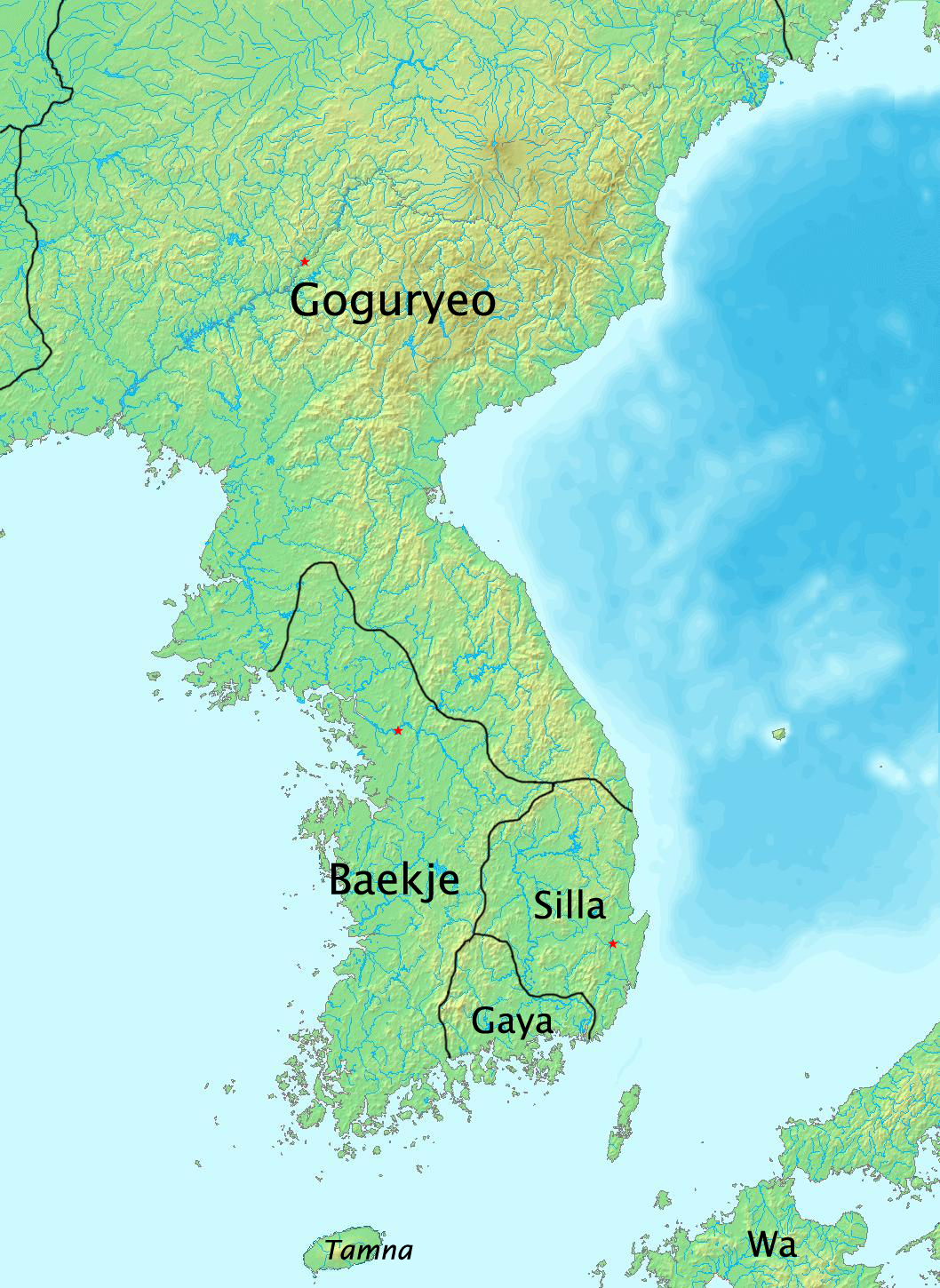
Around 375 CE, the Korean Peninsula would have looked something like this. This would be the boundary of Baekje’s greatest expansion. Public Domain
One hundred years later, Koguryo (here labeled “Goguryeo”) would reach its greatest extent. Source: Myself / CC BY-SA (https://creativecommons.org/licenses/by-sa/3.0)
A relief painting of Koguryo soldiers. Their armor appears to be a kind of llamellar. I was unable to find a date for this work. Public Domain.
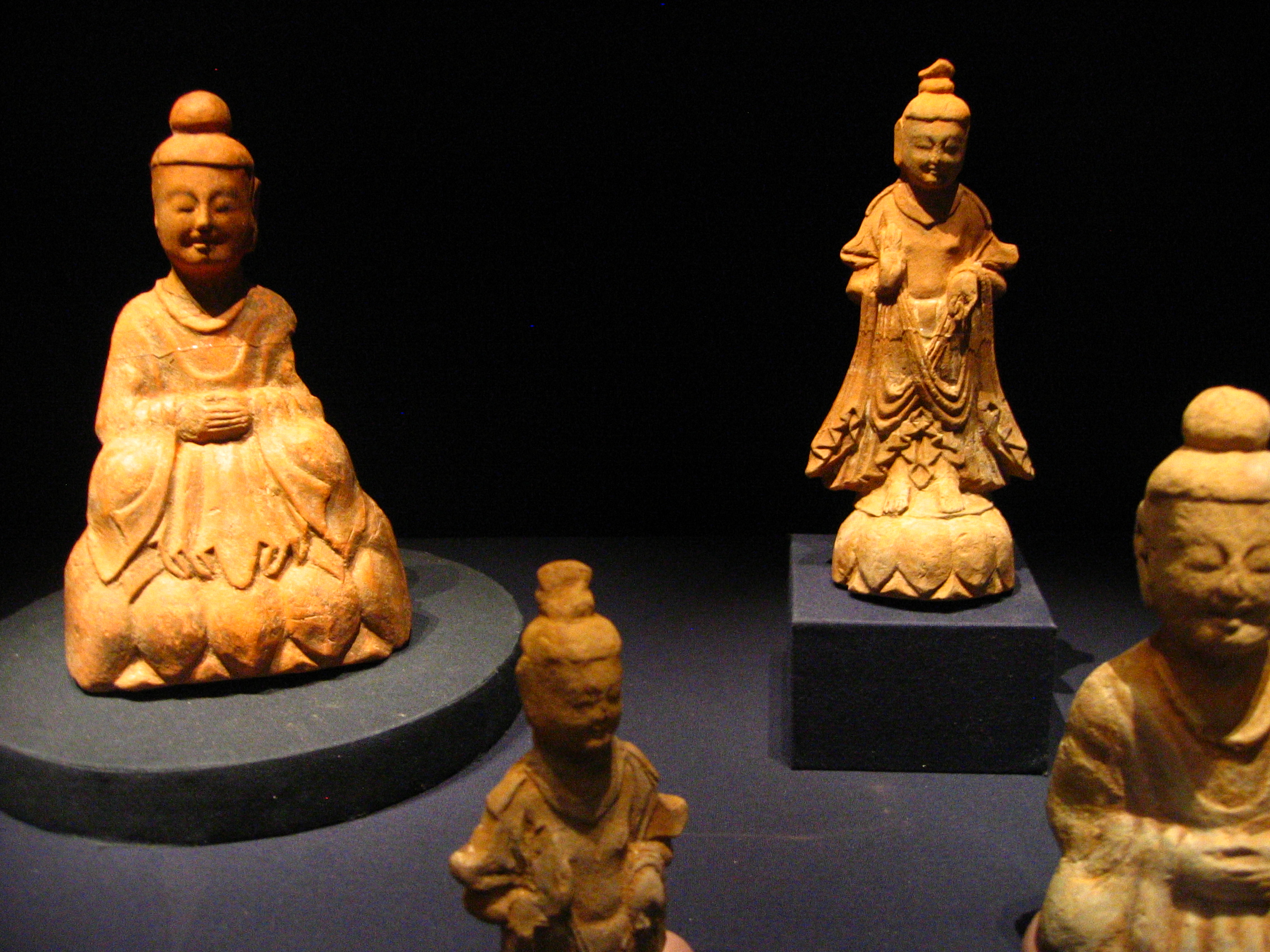
Seated Buddhas and standing Bodhisattvas produced by artisans of Koguryo. Though their pigments have worn away, they would have originally been covered in bright, cheerful colors. Source: https://www.flickr.com/photos/davidtrowbridge/ / CC BY (https://creativecommons.org/licenses/by/2.0)
A re-creation of a Gaya Confederation Soldier. Note the stylish collar and fashionable helmet flair. Source: dentarg / CC BY (https://creativecommons.org/licenses/by/2.0)
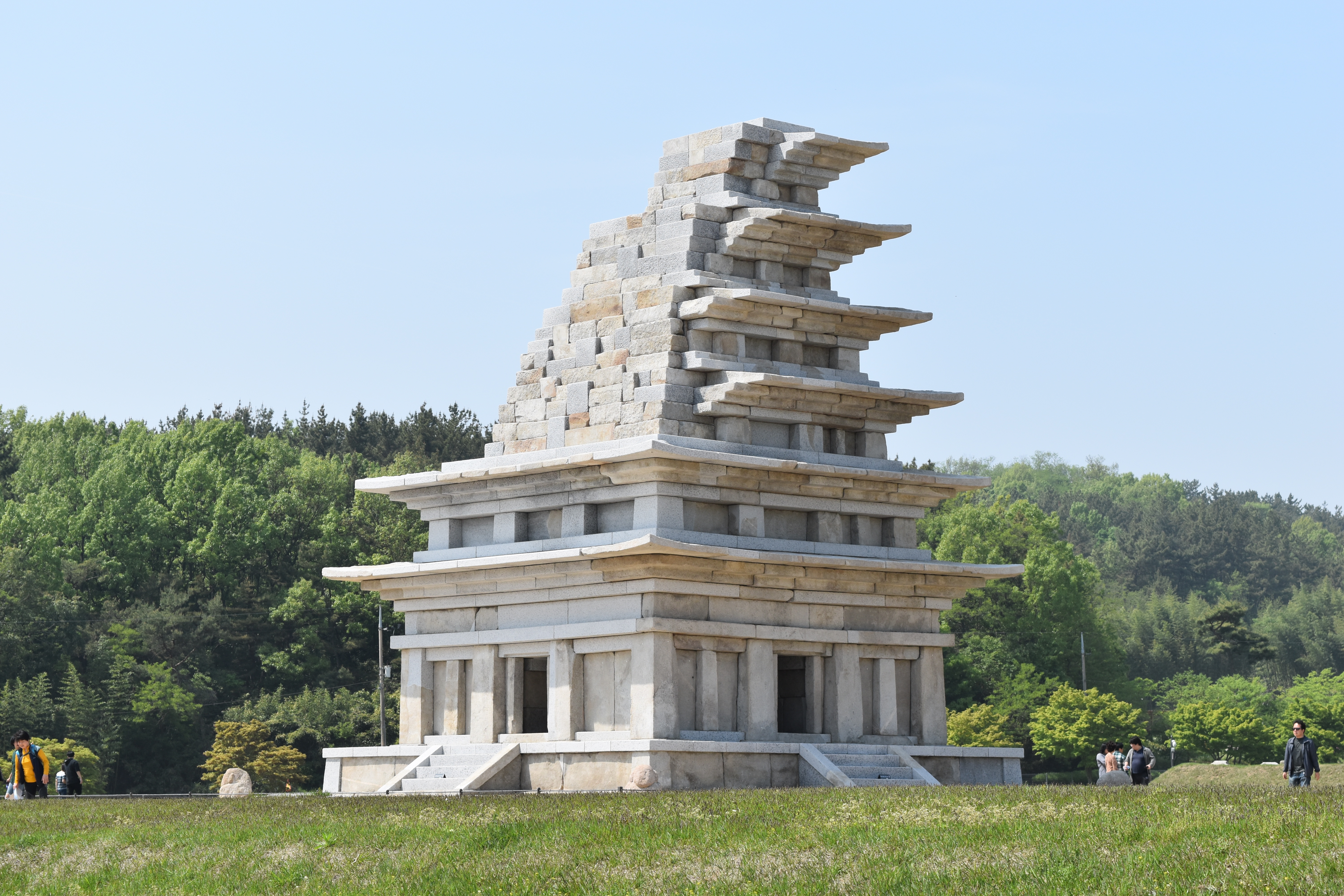
A recreation of Mireuksaji Stone Pagoda, the largest Buddhist temple in all of Baekje. Though this was built in 602, later than the present narrative, I think it nicely displays the capabilities of the Kingdom of Baekje and their culture. Source: Jjw / CC BY-SA (https://creativecommons.org/licenses/by-sa/4.0)
A replica of the infamous Shichichido, or seven-branched sword. The real thing lies in a shrine somewhere in Japan and is rarely viewed. Source: CC BY (https://creativecommons.org/licenses/by/2.0)

The Age of Tombs and Kings

Season 3, Episode 1: The Age of Tombs and Kings
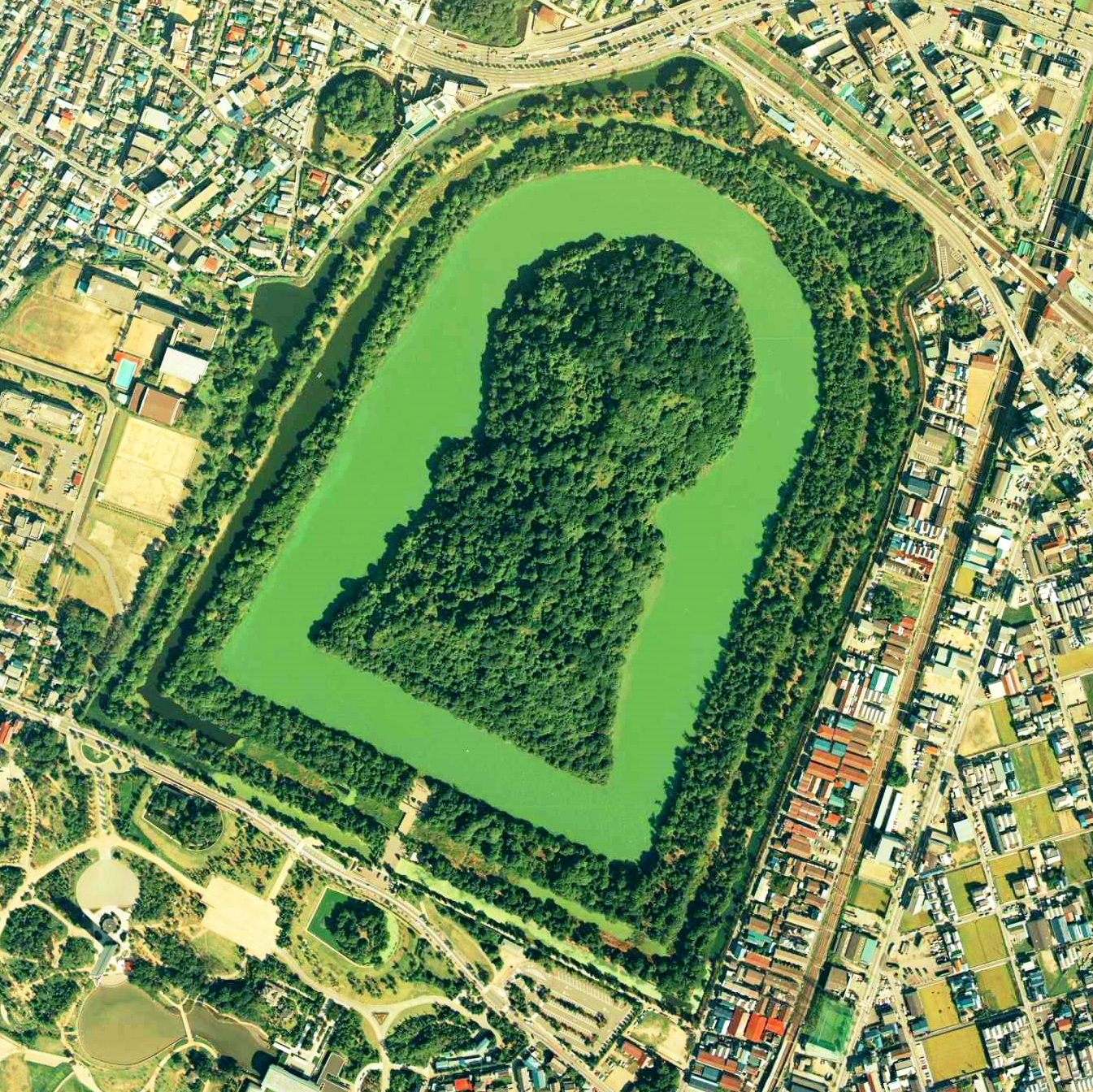
Aerial photo of two preserved Kofun located at uekeno Haniwa no Sato park in Takasaki. Source: 国土地理院 (Geospatial Information Authority of Japan) / CC BY (https://creativecommons.org/licenses/by/4.0)
The entrance to Himegozen Kofun on Kyushu. Impressive stonework! Source: Peka / CC BY-SA (https://creativecommons.org/licenses/by-sa/4.0)

Gishi-Wajinden

The English translation of the Gishi-Wajinden which I used in this episode can be found here. It also has some great maps of Kyushu along with the possible locations of various Yayoi polities on its main page. Enjoy!

Queen Himiko of Yamatai

A recreation of Queen Himiko from the Museum of Yayoi Culture. Source: Artanisen, CC BY-SA 4.0, via Wikimedia Commons

Mythology, Customs, and Religion

Season 2, Episode 9: Mythology, Customs, and Religion
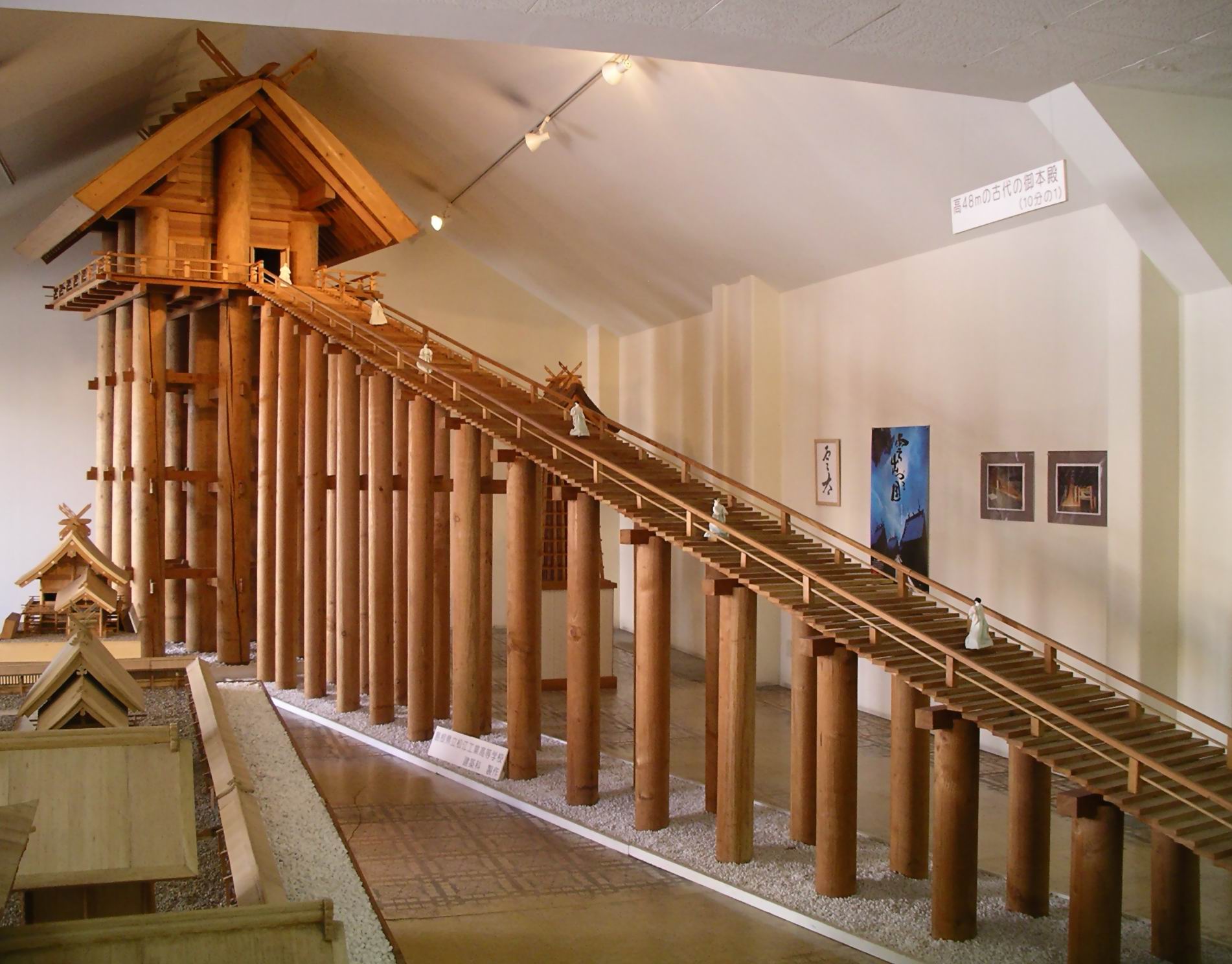
A scale model of what Izumo Shrine may have looked like in ancient times. Source: Blue Lotus / CC BY (https://creativecommons.org/licenses/by/2.0)
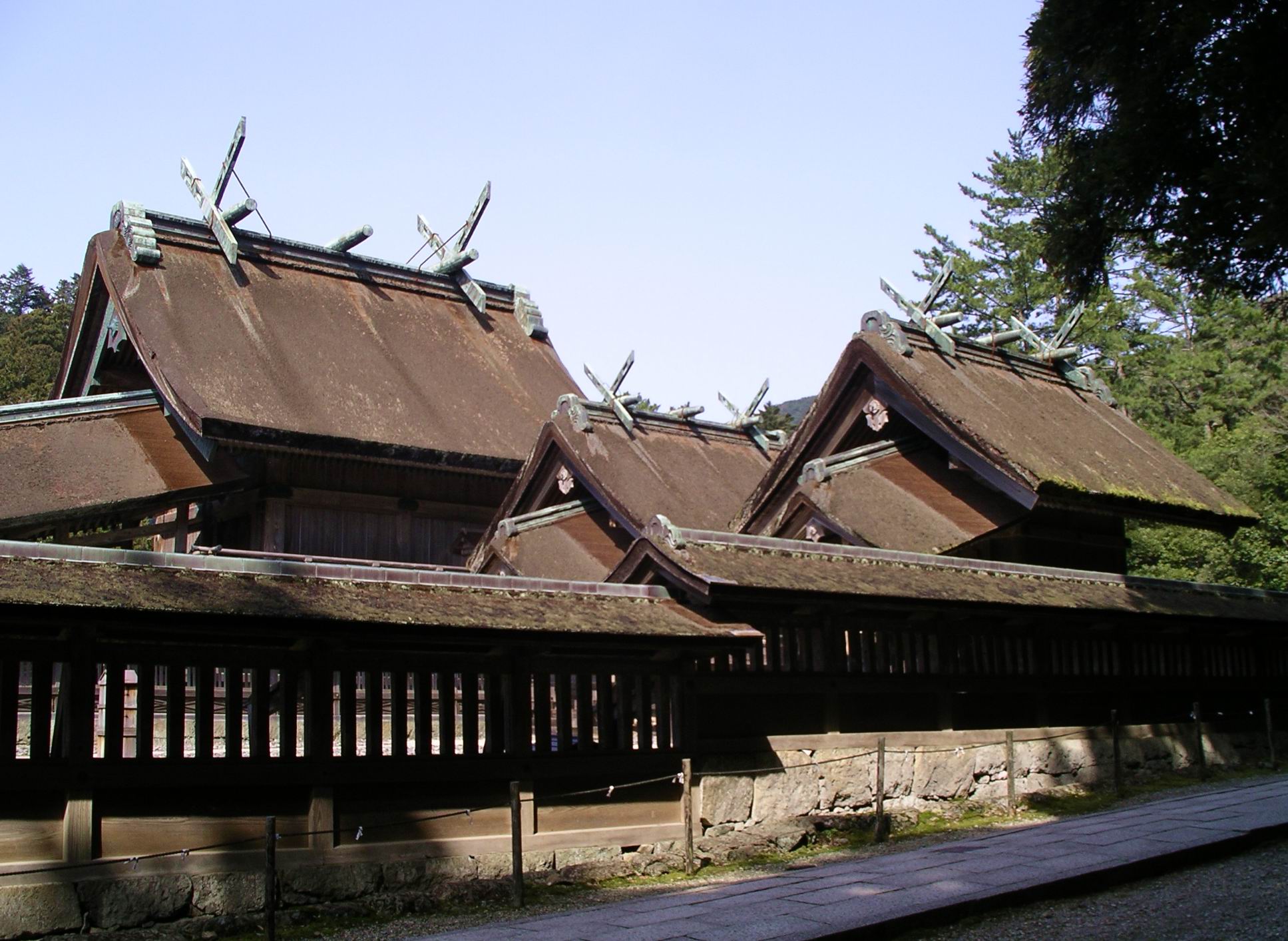
The roof styles of this part of the Izumo complex are very reminiscent of Yayoi-style buildings. Source: Blue Lotus / CC BY (https://creativecommons.org/licenses/by/2.0)
No shrine in Japan is complete without massive ropes. This is Izumo Shrine’s Haiden, a building used for worship and prayer. Source: Miya.m / CC BY-SA (http://creativecommons.org/licenses/by-sa/3.0/)
This is the Kagura of Ise Shrine, a building used for special prayers and the performance of classical dance. Public Domain.
A portion of the Naiku of Ise Shrine, a building dedicated to the worship of the Sun Goddess Amaterasu. Source: N yotarou / CC BY-SA (https://creativecommons.org/licenses/by-sa/4.0)

East Asian Trade

Season 2, Episode 7: East Asian Trade
Knife Money, objectively the coolest form of legal tender ever created. These knives come from the Yan State. Source: PENG Yanan (Neo-Jay) / CC BY-SA (http://creativecommons.org/licenses/by-sa/3.0/)
A map of the silk road, which connected the far east and the far west and encouraged trade and idea exchange. Source: Kelvin Case / CC BY-SA (https://creativecommons.org/licenses/by-sa/3.0)
A coin bearing the image of Roman Emperor Constantius II, found in the Xinjiang region of China. Public Domain.

The Kingdoms of Korea

Season 2, Episode 6: The Kingdoms of Korea
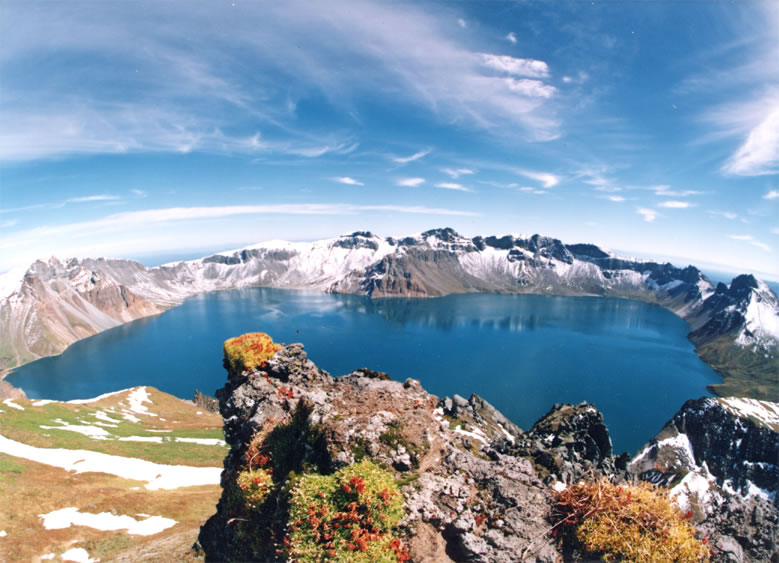
Heaven Lake atop Baekdu Mountain, located in modern-day North Korea, where the mythical founder of Gojoseon was born. Source: Bdpmax / CC BY-SA (http://creativecommons.org/licenses/by-sa/3.0/)
After the 108 BCE conquest of Gojoseon. The southernmost purple commandery is Lelang, which would later be divided and Daifung Commandery created. Source: Xakyntos / CC BY-SA (http://creativecommons.org/licenses/by-sa/3.0/)

Bronze, Iron, Metallurgy, and Bells

A bronze mirror from the Eastern Han Dynasty Period. The mirror’s face is polished and reflective, while the back displays this impressive pattern. Public Domain.
Close-up of a Han ceramic model featuring crossbow-wielding soldiers in the guard tower. Source: PericlesofAthens / CC BY-SA (https://creativecommons.org/licenses/by-sa/3.0)
A Dotaku bell from the Yayoi. I love this image because you can clearly see some of the artwork in the panels of the bell. Animals, birds, and other images probably had distinct meaning for the Yayoi people which is lost to us today. Public Domain.
A Dotaku featuring some stylish swirls on its outer edge. Source: I, Sailko / CC BY-SA (https://creativecommons.org/licenses/by-sa/3.0)

From Villages to Kingdoms

Season 2, Episode 2: From Villages to Kingdoms
Bronze spearheads from Kyushu dating to the 1-2c CE. Source: I, PHGCOM / CC BY-SA (http://creativecommons.org/licenses/by-sa/3.0/)
A Dotaku bell unearthed in Shizuoka prefecture, which is located just to the east of Kansai. Clusters of these bells buried on hilltops throughout central Honshu may have been part of a ritual to ratify alliances between clans. Source: Miguel Hermoso Cuesta / CC BY-SA (https://creativecommons.org/licenses/by-sa/4.0)
Bronze swords excavated from the Yoshinogari site. Katanas are still hundreds of years away, but these would certainly get the job done. Source: Pekachu / CC BY-SA (https://creativecommons.org/licenses/by-sa/4.0)

The Yayoi Way

Season 2, Episode 1: The Yayoi Way
Burial Jars from the Yoshinogari Site. Public Domain.
A stone knife from the Yayoi period on display at the Nagoya City Miharashidai Archaeological Museum. Source: KKPCW / CC BY-SA (https://creativecommons.org/licenses/by-sa/4.0)

Check out the webpage of the Yoshinogari Site for more pictures and history!