The many statues of Longmen Grottoes in Henan, China, which began construction during the late 400s and continued, on and off, through the late 600s. As you can hopefully see from the presence of tourists, some of these statues are quite large! Source: WikiLaurent / CC BY-SA (https://creativecommons.org/licenses/by-sa/3.0)
The Giant Wild Goose Pagoda of Xi’an, China. The original was built from rammed earth during the reign of Emperor Gaozong in 652 CE, but it collapsed after fifty years and was rebuilt during the reign of Empress Wu Zitan near the end of Japan’s Asuka Period. Source: Alex Kwok / CC BY-SA (http://creativecommons.org/licenses/by-sa/3.0/)
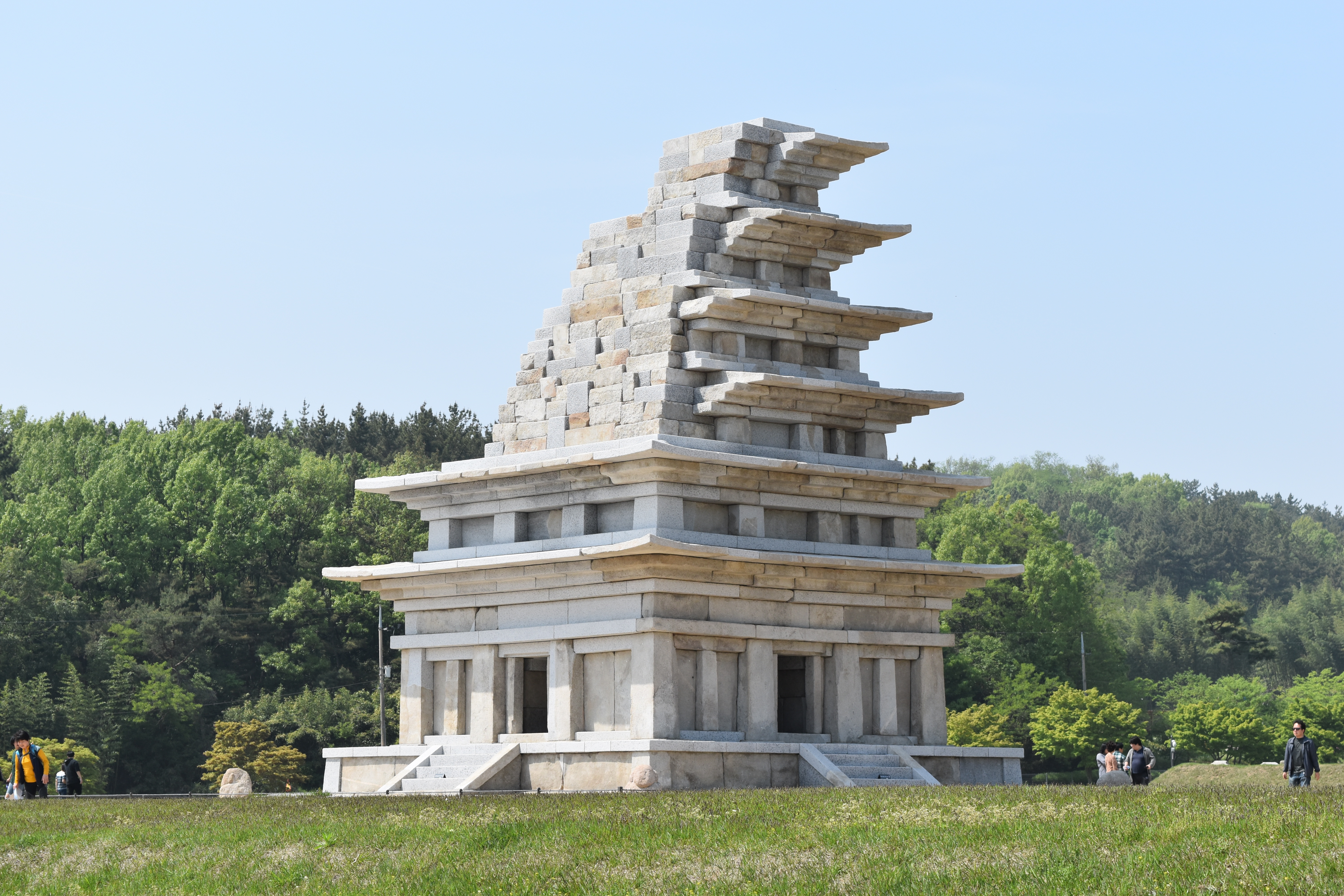
A recreation of Mireuksaji Stone Pagoda, the largest Buddhist temple in all of Baekje. Though this was built in 602, later than the present narrative, I think it nicely displays the capabilities of the Kingdom of Baekje and their culture. Source: Jjw / CC BY-SA (https://creativecommons.org/licenses/by-sa/4.0)
A bronze mirror from the Eastern Han Dynasty Period. The mirror’s face is polished and reflective, while the back displays this impressive pattern. Public Domain.
A Dotaku bell from the Yayoi. I love this image because you can clearly see some of the artwork in the panels of the bell. Animals, birds, and other images probably had distinct meaning for the Yayoi people which is lost to us today. Public Domain.















Recent Comments